
Lincoln Resident Lookup Coverage
Searching for one person in Lincoln is a sequence of record checks. Placer County holds the key records. Lincoln keeps no separate municipal court, recorder, assessor, or vital-record registry. The first source depends on the clue. An APN points toward property records. A case number points toward the court index. A birth or marriage question points toward the lawful copy process.
| Record | What It Confirms | Where to Search | Access |
|---|---|---|---|
| Placer court records | Party role, case type, filing date and case number | Placer Superior Court Online Case Access | Public summary search; file access and copies have limits |
| Assessment and recorded documents | Ownership, mailing and situs distinction, named parties and legal parcel | Placer Assessor, GIS and Recorder | APN or assessment key; index online, images in office or by order |
| Birth, death and marriage records | Event details and eligible identity relationships | Placer Clerk-Recorder and CDPH | Informational or authorized copies; comprehensive indexes confidential |
| Voter records | Own status, residence, precinct and election details | My Voter Status or authorized file request | Authenticated or purpose-restricted; not an open name directory |
| Business and professional records | Entity affiliation, filing address, license status and discipline | bizfile, FBN records and DCA | Official searches are free where published; affiliation is not residence proof |
| Historical directories and indexes | Past residence, family, newspaper and social clues | Lincoln library, PCGS and archives | Holdings and access vary; gaps must be recorded |
| Federal cases | Federal docket location and document access | PACER | Separate account-based system with page charges and a quarterly threshold |
Assessment data names an owner. It does not enumerate every person at an address. A recorded deed names the parties to an instrument, a permit names an applicant or contractor, and a directory or obituary supplies a historical clue. Each result needs a second anchor before it counts as the same Lincoln resident.
Build a Lincoln Resident Profile
Begin with the query exactly as received. Keep every detail: initials, suffixes, directional terms, unit numbers, alternate spellings, married or former surnames, trust names, and an approximate date. Common names cause the most trouble. A name becomes far more useful when paired with an APN, a known address, a case number, a spouse or relative, a business, a document date, or another stable anchor.
- Name variation
- Compare initials, suffixes, married names, former names, and spelling variants before treating two records as one person.
- Property anchor
- An APN plus a deed or assessment result can tie a person to an ownership record, not necessarily to current occupancy.
- Court anchor
- A case number plus filing date is stronger than a name alone because it identifies a specific docket.
- Relationship anchor
- A spouse, heir, business, obituary, or known date can help distinguish two people with the same name.
Parcel records anchor the whole search. The county's Assessment Inquiry system requires a 12-digit fee parcel or assessment number. It does not accept a free-form resident name search. Names alone will not work there. The county GIS parcel map serves as the address-to-parcel bridge. Once the parcel is known, the Recorder index can be searched by party and document reference. That sequence keeps an address clue from being mistaken for a complete people list.
Lincoln Court Lookup Fields
The Placer Superior Court public search spans five categories. Family, Probate, Civil, Criminal, and Traffic each get their own filter. The court portal needs two things. A filing date or date range must be paired with either a case number or a party or company name. No account is needed. Use the original filing date and preserve every dash and leading zero in a case number.
| Case Category | Required selector with Family, Probate, Civil, Criminal, and Traffic options |
|---|---|
| Filing Date / Date Range | Required date pair; use the original filing date and pair it with an identifier |
| Case Number | Conditional text field; include all dashes and leading zeros |
| Party / Company Name | Conditional alternative to case number; exact live partial-match rules are not published |
| Search | Public case-information search action; no account required |
Field rules live on the Online Case Access page.
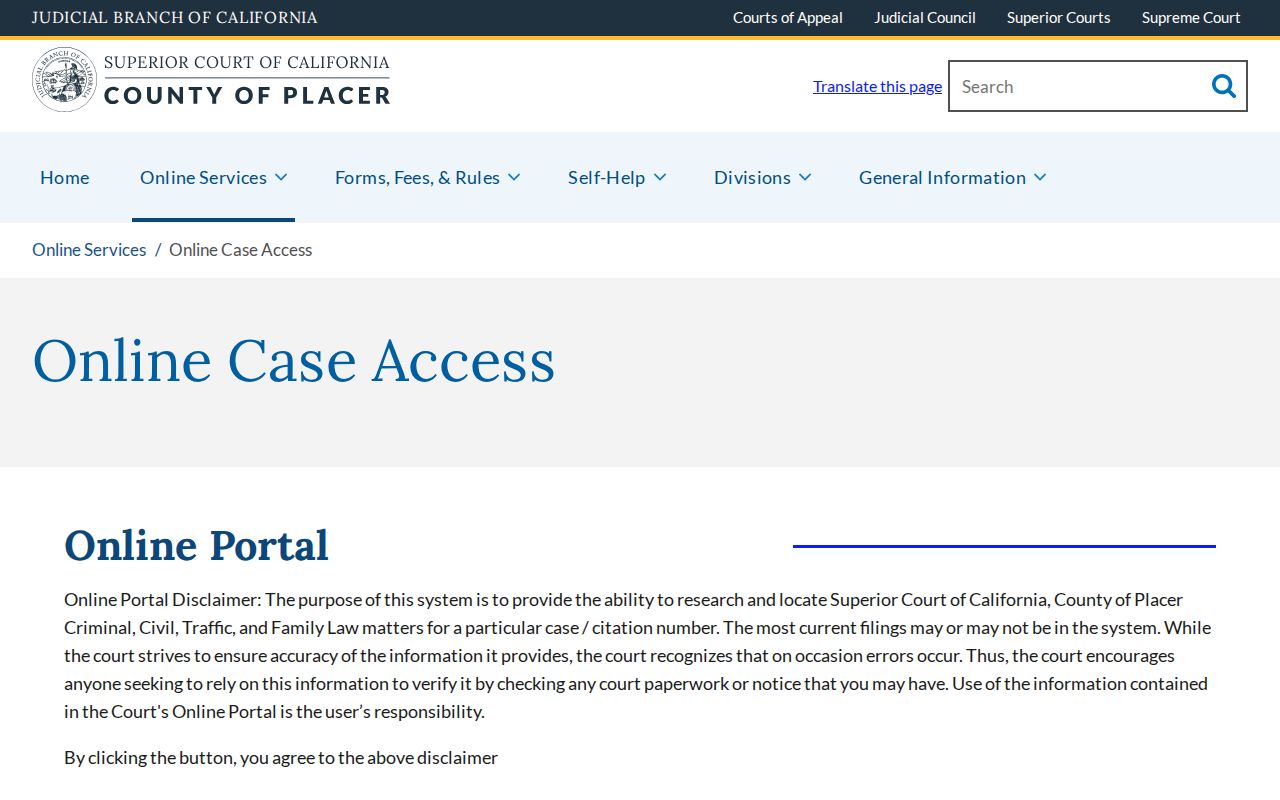
Treat a result as a lead. It places a name in a case. The court's search structure covers category, filing date, case number, and party or company, but the public results do not reveal verified party roles, events, disposition, or document links for an anonymous sample case.
- Expected placement identifiers are the formatted case number and category.
- Remote documents depend on case type and California Rule of Court 2.503.
- Adoption, mental-health, juvenile, search-warrant, Ramey-warrant, and sealed cases are excluded from remote access.
- Most current filings may not yet appear, so a blank result is not proof that no case exists.
Lincoln Court Records in Person
The Hon. Howard G. Gibson Courthouse sits at 10820 Justice Center Drive in Roseville. A public terminal there locates case numbers. The phone line is 916-408-6000. A clerk name search costs $15 per name, but only when the work takes more than ten minutes. Finding the number free avoids that fee. There is no reason to turn a simple identifier search into a paid name search.
Insider tip. A public case result is not the whole file. Treat the docket lead as a path to the clerk, file view, or copy request, not as a certified finding about a person.
Photo identification is required. Keys stay with the clerk at a designated table. Files cannot be disassembled or removed. Daily limits generally run five files per category, though larger chronological groupings are allowed in some civil, family, probate, small-claims, and traffic situations. Calendared files may be unavailable from two days before a hearing through three days after. Off-site retrieval can take up to three weeks, so call before returning.
Written copy requests use form PL-CW001. The form asks for the request date, the requester's name, address, and phone, the case number, party names, and a criminal defendant's date of birth. It also wants a document description, the filed date or approximate period, a COPY ONLY, CERTIFIED, or NAME SEARCH choice, other information, and a call-for-pickup choice. Mail it to PO Box 619072, Roseville, CA 95661-9072, or use the Tahoe division for a Tahoe case. Include a self-addressed stamped envelope and a check payable to Placer Superior Court marked “not to exceed $X.” Allow at least three weeks.
Copies cost $0.50 per page. Comparison is $1 per page. Certified dissolution or domestic-partnership dissolution adds $15, other certification adds $40 per document, and exemplification is $50. No phone, email, or fax copy ordering is offered.
Federal matters live in a separate system. PACER covers the U.S. District Court for the Eastern District of California, requires an account, and charges $0.10 per page, capped at $3 for most documents. Quarterly use of $30 or less is free. The California CDCR incarcerated-person locator is a different state-custody channel. Neither system replaces the Placer Superior Court search. The PACER portal shows the federal access distinction.
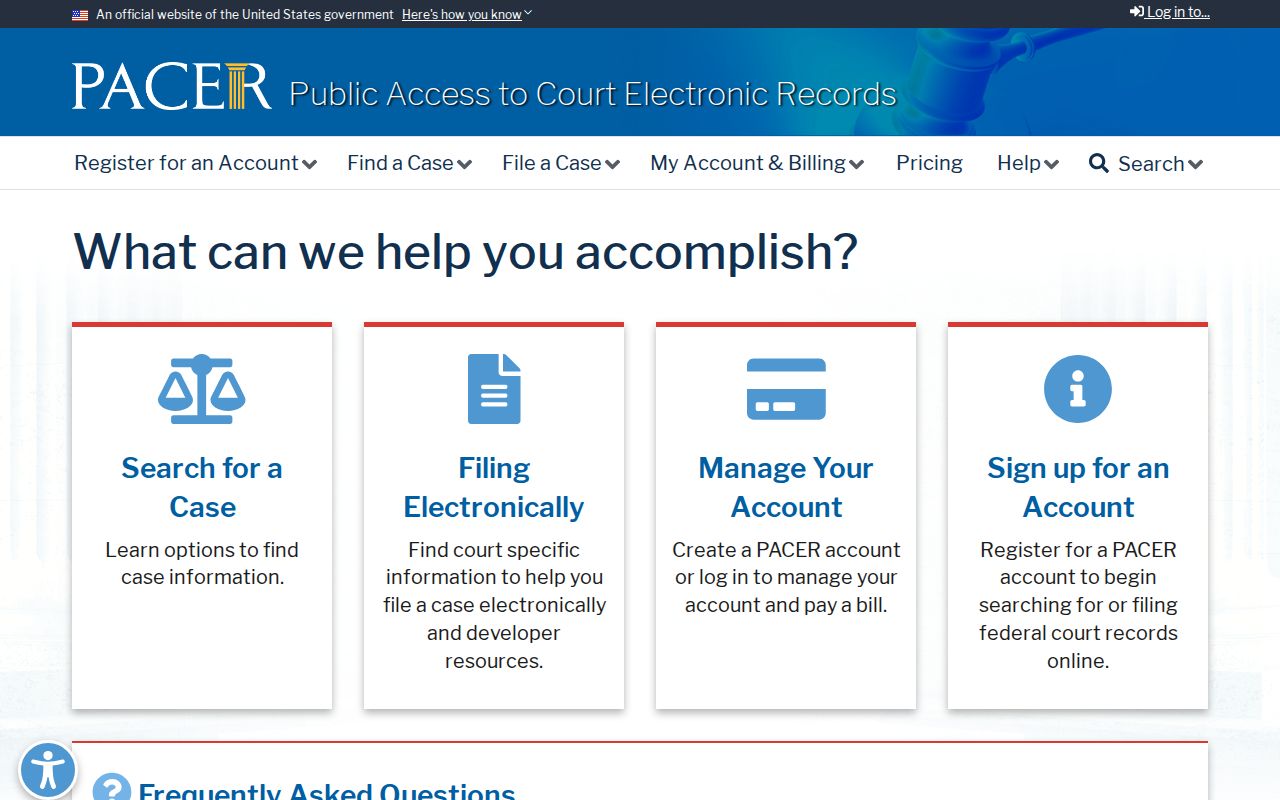
Check the court system first. A Lincoln case will not appear in a federal search, and a federal file will not surface in the Placer Superior Court index.
Lincoln Vital Records by Eligibility
The Placer Clerk-Recorder holds county birth and death records from 1873 forward and marriage records from 1852 forward, with copies available in person or by mail. Deaths in the current and prior year can also go through Placer Vital Statistics at 3715 Atherton Road, Window 2, Suite 6, Rocklin, 530-889-7158, open Monday through Friday 9:00 to 4:00 and closed noon to 1:00. Older deaths route back to the Clerk-Recorder. Public Health no longer sells birth certificates. For statewide ordering, the California Department of Public Health vital-records gateway is another channel.
California birth and death certificates do not become open to the public just because time passes. Informational certified copies are generally available, though they carry a legend stating they cannot establish identity. Authorized certified copies demand a statutory relationship or another listed authority. Eligible applicants include the registrant, a parent or legal guardian, child, grandparent or grandchild, sibling, spouse or domestic partner, an attorney of record, a court-authorized person, law-enforcement or government officials acting officially, and a licensed adoption agency. A death record also lists an official funeral director.
- Placer birth copy: $34 in the documented 2026 schedule; CDPH birth copy: $31.
- Death copy: $26.
- Public marriage copy: $19.
- Confidential marriage copy: $24 from Placer, limited to a party or court order.
- CDPH dissolution certificate: $18; court file copies are separate.
California seals its birth, death, and marriage indexes. H&S Code §102230 makes them confidential and exempt from the CPRA. Two other statutes, H&S Code §§103525-103526.5, spell out who may receive informational copies and who may receive authorized ones.
Mailed authorized requests carry extra weight. The sworn statement must be acknowledged by a notary. A birth application asks for the name at birth, the birth date and city, both parents' birth names, the applicant's relationship and purpose, and contact details. A death application asks for the deceased's name, the death date and city, the parents' names, the applicant's identity and relationship, the purpose, and notary information. Keep one thing in mind: fees are kept as search fees even when no record turns up.
Lincoln Voter Lookup Rules
California My Voter Status is built for individual verification, not as a public Lincoln name or street directory. Placer Elections sits at 3715 Atherton Road in Rocklin, 530-886-5650, open Monday through Friday from 8:00 to 5:00. The self-service form uses these fields:
| First Name | Required text field for the registered identity |
|---|---|
| Last Name | Required text field for the registered identity |
| Date of Birth | Required authentication field and not public display |
| California Driver License or ID | Conditional exact credential when requested |
| Last four SSN | Conditional alternative identity check when applicable |
An authenticated result can show the voter's own status, party preference, address, precinct and districts, polling place or vote center, vote-by-mail status, and ballot status. It never shows ballot choices. Elections Code §2194 keeps affidavits confidential. The exceptions are listed election, scholarly, journalistic, political, governmental, or official-investigation uses. Driver license and ID numbers, Social Security numbers, and signatures stay confidential. Government Code §7924.000 and §2166 and following sections add further restrictions and confidential-voter protections.
A statewide voter file request costs $100 for qualified requesters. A specific-voter request costs $30 each. Those require full name, date of birth, county, and residence address. Requests are limited to ten, with a $100 maximum. The published regulations describe extra fields. These include registration identifiers, mailing address, phone or email, language, gender, party, status and dates, precinct, birthplace, districts, and participation history, all subject to permissions. Commercial use is prohibited. Placer County publishes no current form or delivery details for a county-file request. Call 530-886-5650 before counting on that route. The state voter-registration information page describes the state application route. The voter-data access regulations explain the field and fee limits.
Common myth. California voter data is purpose-restricted and is not a public street directory. A self-authenticated status result and an authorized file request are different channels.
Lincoln Heir and Classmate Routes
The right resident lookup depends on the human question behind it. An heir search usually turns on a probate case. A classmate search leans on yearbooks or newspapers. A birth-parent question points to an official adoption-information route. A historical name is better served by the verified Lincoln city directory collections than by any unverified claim that a complete printed run exists.
- Heir. Search Placer Probate by decedent or party when the case is public, then ask the clerk about the file, petitions, notices, and any redactions.
- Birth parent or adoptee. California CDSS Adoption Record Information is an official route, not public name searching. The CDSS adoption information page explains the lawful path.
- Former classmate. Ask the Lincoln Public Library about yearbooks, local newspapers, and HeritageQuest or in-building Ancestry access. A named collection and year are stronger than a broad web search.
- Historical resident. Compare the 1861 Placer title, the 1890 Great Register, the 23,727-entry Archives index, obituaries, and deeds while marking each source's date and role.
These routes support family history and reconnection while respecting a missing record. A blank index, a restricted file, or a protected address marks an access boundary. It is not an invitation to fill the gap with an unverified compilation.
Lincoln Business Lookup Records
A business filing can tie a name to an entity. It rarely proves where a person lives. The Secretary of State's bizfile business search works by entity name or number. Results include legal name, number, type, status, and formation or registration details, plus jurisdiction, principal and mailing addresses, agent for service, and filed statements or images. Read those as filing addresses and entity roles.
The Consumer Affairs license search covers professionals. Fields differ by board. Common results include a name or number, board, status, expiration, and discipline entries. A Fictitious Business Name statement is a separate Placer County Clerk-Recorder record. FBN statements stay public until expiration, abandonment, or withdrawal, generally for five years. The published fees are $30 for the first business name or one owner, plus $5.50 for each extra name or owner at the same location. Abandonment or withdrawal with additions costs $30, with one certified copy included. Extra copies cost $2. Publication begins within 45 days, runs weekly for four weeks, and ends with a newspaper affidavit.
For a named business or credential, pair the DCA search with the state filing. Lincoln licenses businesses inside the city limits. Placer County licenses cover unincorporated areas. The boundary check matters. A mailing address can say Lincoln while the parcel sits outside the incorporated boundary.
Lincoln's permit system adds an address, permit type, project description, status, dates, and contact roles. An applicant is not automatically a resident. Historic or unindexed city records go through the City Clerk's California Public Records Act route, which accepts online, email, in-person, or phone requests at 916-434-2494. Give the exact address, record class, and date range. The city normally decides within 10 calendar days. Unusual circumstances allow a 14-day extension, and CPRA cannot force the city to create a new resident directory. The Lincoln public-records page is the request gateway.
Lincoln Privacy and DROP
California's CCPA and CPRA statutes give qualifying people real leverage over their data. Civil Code §§1798.100-1798.199.100 sets the framework. Rights include knowing what is held, deleting it subject to exceptions, correcting it, opting out of sale or sharing, limiting sensitive-information use, and avoiding discriminatory treatment. The Delete Act created something simpler. DROP lets one request reach every registered data broker. Those rules took effect January 1, 2026. A person can use the California DROP rules, the broker registry, direct deletion or Do Not Sell or Share requests, and Global Privacy Control, then save confirmations and check back later.
Safe at Home protects qualifying survivors and other covered at-risk people. It began in July 1999. The program forwards first-class, certified, and registered mail through a substitute address and can support confidential voter registration. The published contact is SafeAtHome@sos.ca.gov or 877-322-5227. A protected address may be absent or differ from where mail actually arrives.
Other lawful dead ends include sealed or juvenile court matters, confidential vital-record indexes, protected voter data, and records withheld under a valid exemption. Fix a wrong assessment with the Assessor. A recorded error goes through the proper recording process, a court index issue through the clerk, voter data through Elections, and a license issue through its board. The custodian corrects records. An unrelated third-party profile is not the route.
Verify a Lincoln Resident
A trustworthy resident lookup leaves an evidence trail. The goal is not every hit with a similar name. It is linking one person to one record through a source, a date, and an independent anchor.
- Preserve the name, unit, street form, alternate spelling, and approximate date exactly as received.
- Use GIS and the Assessor when the clue is an address or parcel, then separate situs, mailing, owner, and occupant claims.
- Use the court category, filing date, case number, or party name fields rather than a name alone.
- Add a second anchor such as a deed, spouse, business, known date, obituary, or case number before merging records.
- Request the appropriate informational, authorized, certified, or file copy from the custodian when an index lead is not enough.
- Log the access date, fee, portal limits, and whether the conclusion came from index metadata, an image, or a full file.
- Docket
- The court's organized record of a case, its filings, and related events. A docket lead is not automatically the full file.
- Index versus image
- An index gives a reference such as party, date, type, or number. An image or file contains the underlying instrument or court material when access is allowed.
- Certified copy
- A custodian-attested copy issued under that office's rules. It is different from an informational copy and from a search result.
The next question may be who else appears at the address. That is the Lincoln by-street workflow. An older household clue points to a different route. It fits the city directory collection path instead. Historical context beats stretching one index hit into a present-day claim.
Legal Limits on Lincoln Lookup
Access is not permission to threaten or harass. Penal Code §646.9 covers stalking, and Code of Civil Procedure §527.6 offers a civil-harassment restraining-order path. Penal Code §530.5 covers unlawful use of identifying information. California's voter rules, vital-index confidentiality, Safe at Home, and court exclusions mark real boundaries too.
A lawful lookup still serves many purposes. Genealogy, heir questions, reconnection, civic curiosity, and verifying an official filing all fit. Stop when a custodian withholds a record. Use the published request or correction path rather than trying to defeat the restriction.
Lawful personal use. Use Lincoln records for a legitimate personal or historical purpose. Do not use a resident lookup to stalk, harass, intimidate, or harm another person.
The California Megan's Law search is a separate registry. It carries its own statutory warning and search limits.
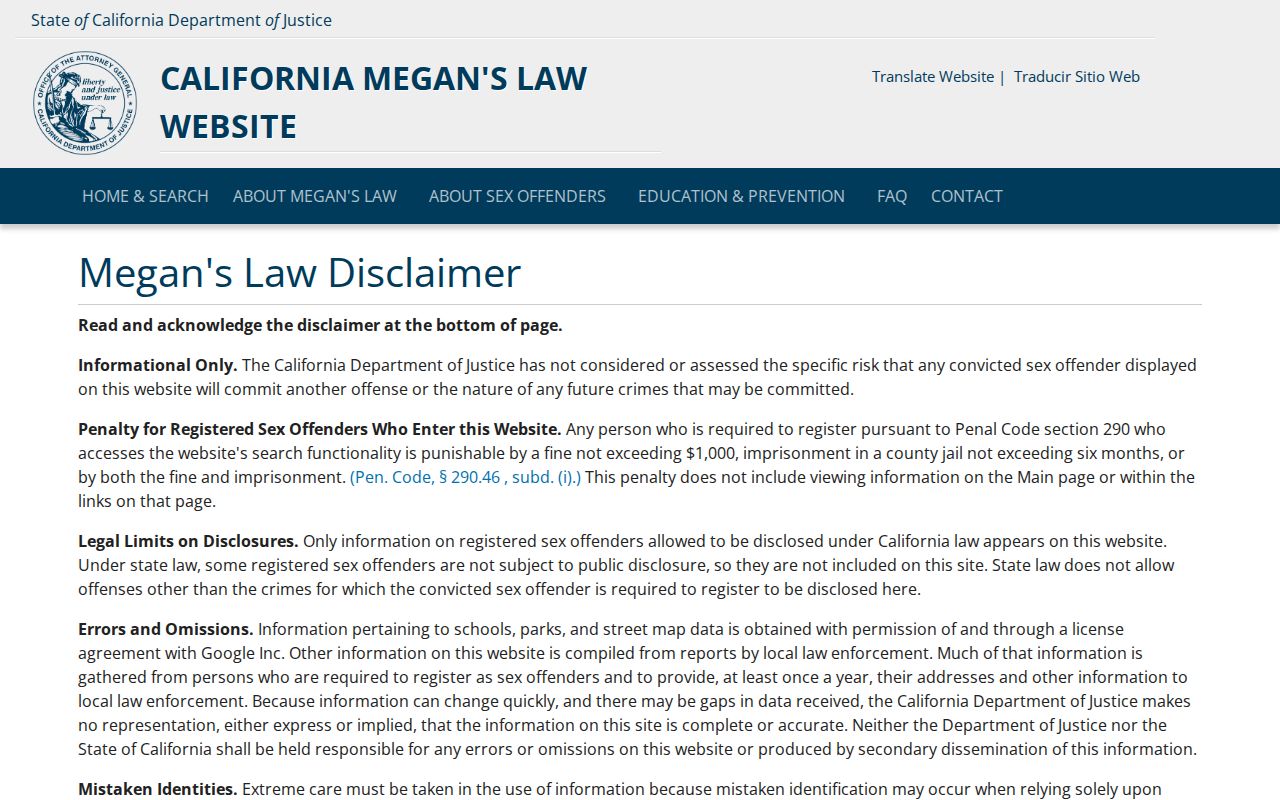
The registry image makes one point clear. Read the official warning, and keep a public-safety record apart from a general resident identity profile.